
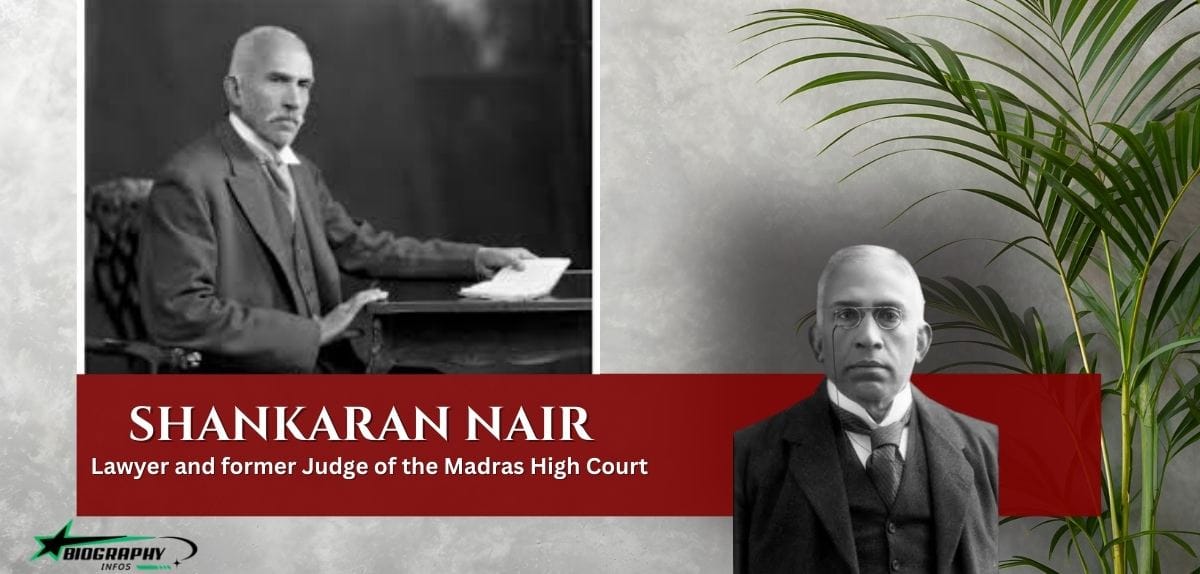
In the history of India, you might have heard of Shankaran Nair. He was one of the most respected and revered Indian leaders of the late 19th and 20th centuries. He was renowned for his courage, intellect, and unwavering commitment to justice.
Sir Shankaran Nair was a trailblazer of a lawyer, political thinker, and social reformer playing an important role in India’s nationalist movement. He was one of the few people who openly challenged the British authority at a time when only a few Indians would dare to do so.
In case you haven’t heard much about him, that’s alright – a lot of people tend to fall asleep during History class!
This article will provide a comprehensive understanding of Sir Chettur Shankaran Nair. He was a man who was not just remembered for his legal words, but also for his moral voice by which he stood firmly for Indian rights.
Who was Sir Chettur Shankaran Nair?
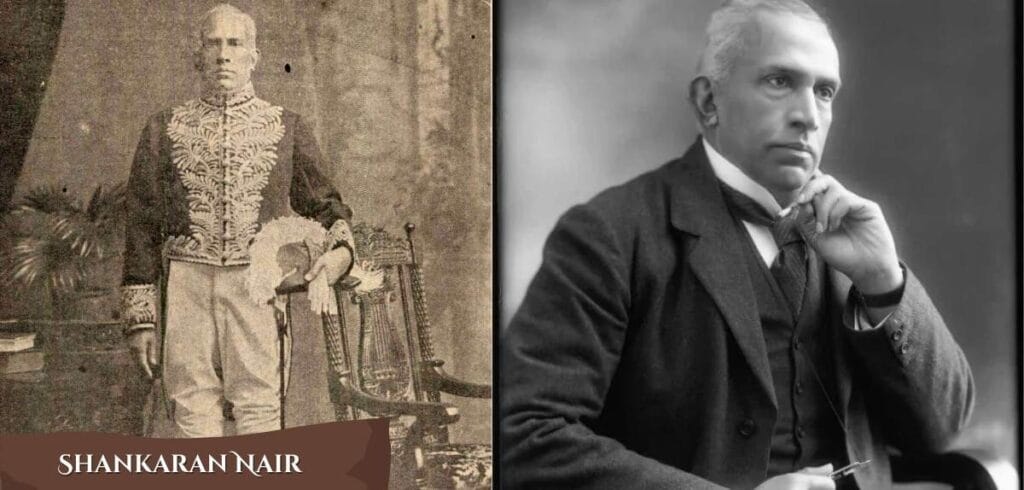
Sir Chettur Shankaran Nair (1857-1934), was a trailblazing Indian lawyer, judge, and social statesman. He was one of the most respected Indian leaders of the 19th century. This was mixed with his career, which bridged legal brilliance, political courage and social reforms during the British colonial rule.
His life story was marked by principal stands such as his fallout over the Jallianwala Bagh massacre, and it continues to inspire Indians. His life story was recently featured in ‘Kesari Chapter 2’.
| Full Name | Sir Chettur Shankaran Nair |
| Age (when he died) | 77 years old |
| Birthdate | 11th July 1857 |
| Died | 24th April 1934 in Madras (now Chennai) |
| Reason for Death | Age-related issues |
| Known For | Protest against Jallianwala Bagh; Serving as the President of the Indian National Congress; Pioneering socialist reforms and rights |
Early Life of Shankaran Nair
Shankaran Nair was born in Mankara village near Guruvayur in Thrissur district of Kerala. He hailed from the aristocratic Chettur family, who were renowned for their matrilineal traditions. His father was Mammayii Ramunni Panicker, and he served as a tahsildar under the British Raj. This allowed Shankaran to be exposed to the colonial administration and architecture from a young age.
When he was in his formative years, Shankaran was initially home-schooled in the traditional Kerala style, but soon he pursued formal education. In terms of this, he excelled in Malabar schools and earned first-class honors in arts from Kozhikode’s Provincial School. Later on, he headed to Madras Presidency College to pursue further studies.
Shankaran’s intelligence was spoken of far and wide as he shone in his academics. He went on to earn his law degree from Madras Law College in 1879, just two years after graduating in arts.
Despite growing up in a rigid caste hierarchy and system, where gender inequalities were prevalent, Shankaran developed a reformist attitude. He later decried India as the land of ‘ignorant, illiterate and half-starved’ population shackled by dark superstition and caste.
Legal Career
After having attained his law degree, Shankaran launched into practise in 1880 at the Madras High Court. He quickly rose to a formidable advocate and rivaled giants like V. Bhashyam Aiyangar.
By the year 1884, the Madras government had to tap him for the Malabar District Enquiry Committee, thus highlighting his administrative acumen.
He went on to serve as the Advocate-General from 1906 to 1908, wherein he acted as a judge intermittently. During this period, he founded a few influential publications like the Madras Review and Madras Law Journal.
In 908, his legal career rose, and he ascended to permanent judge on the Madras High Court, wherein he served until 1915. This was considered a rare feat for an Indian back then.
His legal career was highlighted when he ruled in the Collector Ashe’s murder case, and he upheld Hindu reconversions. During this case, he declared converts werent outcasts.
Political Rise
Shankaran took advantage of his legal career’s success and plunged into nationalism early on, whilst chairing Madras’s First Provincial Conference in 1897. He also chaired the Indian National Congress session that year, at Amraoti. He was considered the youngest president at just 40 years old.
During this ascent to power, he lambasted the British ‘highhandedness’ and demanded Dominion Status self government. He went on to join the Madras Legislative Council in 1900 and served on Lord Curzon’s 1902 Raleigh University Commission.
His political career rose more in 1915 when he was appointed to the Viceroy’s Executive Council, as Education Minister. During this period, he pushed constitutional reforms and authored the 1919 Minutes of Dissent that actually influenced the Montagu-Chelmsford scheme.
He went on to advocate for English education to bring about women’s empowerment and rational discourse. This was seen as him opposing sectarian universities like Banaras Hindu University.
He had become a fierce social reformer and was fighting caste abolition, women’s equality, and more. At the 1897 Congress, he envisioned a secular India with education for the lower, less privileged castes and barrier-free progress.
The Jallianwala Bagh Crisis in 1919
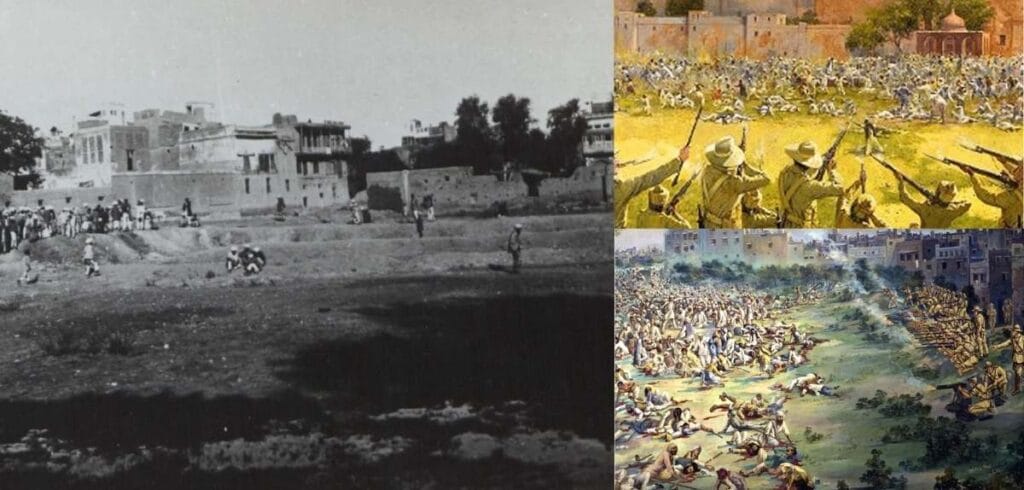
The defining moment for Shankaran’s life came after the famous Jallianwala Bagh massacre in 1919. This was when the British troops opened fire on Indian civilians in Amritsar, and Nair was deeply disturbed by the British government’s brutality. Despite the government’s attempt to justify the massacre, Shankaran took a bold step and resigned from the Viceroy’s Executive Council in protest. This made him one of the highest-ranking Indians to oppose the British actions while being within the system openly.
This was seen as a powerful and moral statement that truly shocked British authorities and inspired Indian nationalists as well.
Legal Battle against the British Authority
Shankaran Nair’s opposition in the Jallianwala Bagh massacre did not stop at just his resignation. He openly criticized Michael O’Dwyer, the then Lieutenant Governor of Punjab, who actually defended the massacre. In response to his opposition, O’Dwyer filed a defamation lawsuit against Nair in a British court. Despite personal risk and immense pressure, the latter stood firm and used the trial to expose the raging injustices of colonial rule.
Although the British court ruled against him, the trial certainly brought international attention to the British atrocities prevailing in India. This strengthened the moral legitimacy of India’s struggle for freedom.
Publications of ‘Gandhi and Anarchy’
Shankaran Nair wrote and published the book ‘Gandhi and Anarchy’ and he critically examined Mahatma Gandhi’s methods. This included non-cooperation and civil disobedience. He argued that mass movements without constitutional safeguards could end up leading to a lot of disorder and misconduct.
shankaran nair Later Years and Legacy
Sir Shankaran Nair retired in 1930 after the Viceregal Dominion pledge, and he died a few years later in 1934. At that time, he was in Madras and was married to Palat Kunhimalu Amma (died in 1926). They had six children, and his descendants included diplomats like K P.S Menon, Shivshankar Menon, and NASA astronaut Anil Menon, and more.
Shankaran’s legacy has endured as a constitutionalist bridge between moderates and agitators. His courage and his resigning power, faving opposition – all of it embodies patriotism in the most fearless manner.
In recent cultures, his life story, struggles, and rise in power have been revived in ‘Kesari Chapter 2’ in 2025. The movie starred Akshay Kumar and retells the scintillating story of Sir Shankaran Nair, thus underscoring him as a ‘legal titan’ who shook the empire of British Raj.
Why does Shankaran Nair still matter in 2026?
In the modern era, where justice seems to have been forgotten and the cries for justice are being muted, Nair’s life remains deeply relevant. His willingness to stand alone and walk the path alone while crying for truth is immensely inspiring. He had challenged the higher authority and accepted the personal consequences thrown on him just to offer timeless lessons for the future generation is what made him a true leader.
Today, he is considered a reminder that real courage often lies in calm, principled resistance backed by moral clarity – not in loud and contemptuous rebellion.
Conclusion
Shankaran story might not be overly emphasized in the History of India, but his efforts have not been forgotten. He was far more than just a lawyer or politician – he was the conscience of India. His journey from a village in Kerala to the highest levels of colonial administration was inspiring. His open protest against injustice was the true evolution of India’s freedom movement.
By choosing integrity over comfort and justice over power, Sir Chettur Shankaran Nair has secured a lasting place in India’s historical and moral legacy. As an Indian, I am proud to say that his story is still kept alive – even if it means in the form of a Bollywood movie.
FAQs
He died on 24th April 1934 in Madras. At that time, he was 77 years old and died of age-related ailments.
He was not directly involved, but he strongly condemned the British government’s actions and resigned from the Viceroy position. He became one of the highest-ranking Indians to oppose the massacre openly.
Yes, Shankaran Nair was an active member of the Indian National Congress and even served as the President in 1897.
Yes, he did, but after his principles clashed strongly clashing with the government, he openly criticized them.
Read More –
Rashika Shetty: Age, Height, Movies, DOB, Bigg Boss 12, Husband, Net Worth & More
Bianca Censori Age, Biography, Height, Education, Career, Net Worth, Husband & Controversies