
Introduction
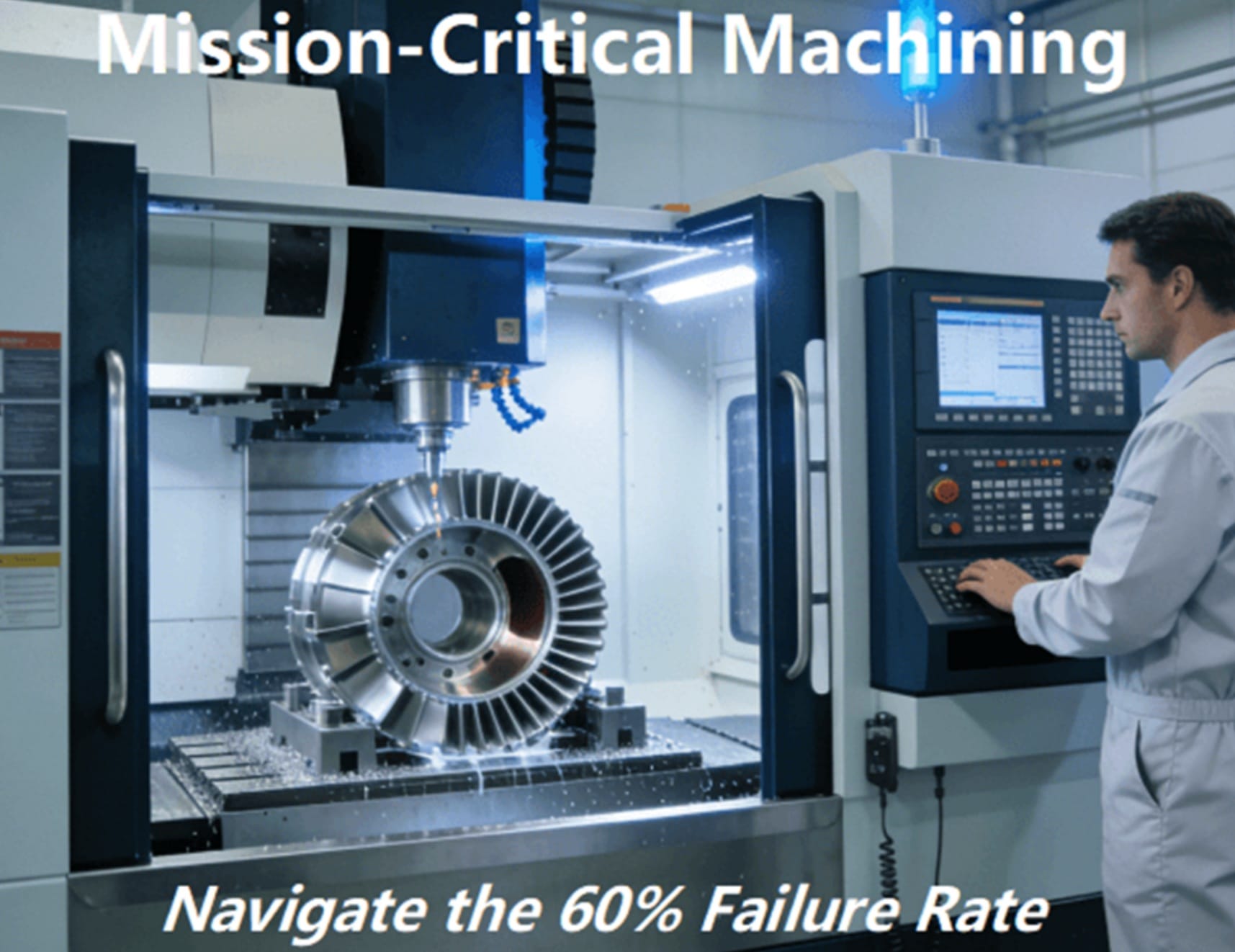
In the high-stakes sectors of aerospace, medical, and advanced automation, the failure of a mission-critical component made from titanium or aluminum can result in catastrophic financial loss and safety hazards. Industry data suggests that nearly 60% of early component failurescan be traced back to the manufacturing process, stemming from improper supplier selection or a fundamental lack of understanding of material-specific behaviors. This high failure rate underscores the severe risk hidden within the supply chain.
The core problem is a procurement process that prioritizes superficial metrics. Decisions are often made based on equipment lists and unit price alone, overlooking the supplier’s deep expertise in material science, thermal management, and preventive quality engineering. This knowledge gap is critically exposed when machining challenging materials like titanium (prone to work hardening and poor heat dissipation) and aluminum (susceptible to galling and thermal distortion). This article provides an engineering-led assessment frameworkto help you identify partners with the substantive capability to mitigate these risks.
How to Evaluate a Supplier’s Mastery Over Titanium’s Notorious Machining Challenges?
Machining titanium alloys like Ti-6Al-4V is a discipline defined by managing extremes. The material’s low thermal conductivitytraps heat in a tiny zone at the cutting edge, while its high strength and tendency to work-harden demand precise, controlled cutting action. A supplier claiming titanium expertise must demonstrate a command of physics-based solutions, not just access to a machine. True mastery is evidenced by a parameter librarytailored to specific heat treatment states (annealed vs. solution-treated and aged), as the optimal speeds, feeds, and toolpaths differ dramatically, directly impacting the final part’s microstructure, fatigue life, and dimensional stability.
1. Evidence-Based Heat and Galling Management
General coolant use is insufficient; targeted, high-pressure application is mandatory. Look for a supplier that employs through-tool coolant systemsexceeding 70 bar to break up chips, penetrate the cutting zone, and instantly remove heat. Furthermore, they should specify tool geometries and specialized coatings (like AlCrN)designed to prevent material adhesion (galling) and the formation of the brittle “alpha case” surface layer, which can initiate catastrophic cracks under cyclic loading. This level of process specification is the first indicator of genuine expertise in managing heat in titanium machining.
2. Process Validation Through Data and Standards
Expertise should be grounded in authoritative references and verifiable data. A knowledgeable partner can reference industry standards and material data, such as the machining guidelines found in the ASM Handbook on titanium alloys, to justify their process choices. More importantly, they should provide actual machining data and results from past projects — achieved surface roughness (Ra), microhardness tests confirming the absence of heat-affected zones, and tool life metrics. This moves the conversation from claims to evidence-based capability.
3. Building a Foundation for Risk Mitigation
Therefore, evaluating a supplier for titanium work is an exercise in forensic process examination. It requires looking past the machine brand to the science applied on the shop floor. The right partner views each titanium cut as a controlled thermal and mechanical event, with parameters designed to protect the material’s inherent properties. This deep understanding of material properties for machiningtransforms a high-risk operation into a predictable, repeatable process, forming the non-negotiable foundation for any reliable Titanium CNC Machining Servicespartnership.
What Strategies Separate True High-Speed Aluminum Machining from Basic Cutting Operations?
Achieving high speed in aluminum machining is easy; achieving high speed with precision, stability, and perfect surface finish is an engineering art. The challenges are distinct: managing stringy, difficult-to-evacuate chips, preventing thermal distortion of thin features, and eliminating even minor vibrations that ruin surface quality. A true high-performance operation moves beyond simply running a spindle at maximum RPM. It integrates a holistic system encompassing dynamically balanced HSK toolholders, strategic toolpath planning for thermal equilibrium, and diamond-tool finishingfor optical-grade surfaces on critical features.
l The System Behind High-Speed Stability: Speed without stability guarantees poor quality. Leading suppliers utilize vibration-damped, high-precision toolholding systemsto maintain rigidity at extreme rotational speeds. Their CAM programming employs adaptive or trochoidal toolpathsthat maintain constant tool engagement, preventing shock loads that cause chatter. For thin-walled components, they implement a “balanced roughing” strategy, removing material symmetrically to prevent stress-induced warping before the final, light finishing passes. This systematic approach is the hallmark of professional Aluminum CNC Machining Services.
Precision Finishing as a Deliberate Discipline: The final surface is a testament to the entire process chain. For components requiring exceptional flatness or low roughness (e.g., sealing surfaces, optical mounts), the process extends to a controlled finishing environment. This may involve the use of single-crystal diamond toolson dedicated, high-stability machines, with temperature and humidity controlto prevent micro-scale thermal expansion. The ability to consistently deliver such finishes indicates a supplier committed to the highest echelons of Precision CNC Machining Services, where every variable is managed.
Engineering for Predictable Outcomes: Thus, distinguishing a true expert from a basic machine shop requires examining their preventive strategies. Do they discuss chip evacuation and coolant filtrationto prevent re-cutting? Do they have a documented approach for machining long, thin features without taper? Their answers should reflect an understanding of aluminum’s behavior as a system of challenges to be engineered out, not just a material to be removed. This engineering mindset is what ensures your CNC Machining for Precision Partsmeets the most demanding functional and aesthetic requirements.
Why is 5-Axis Capability a Non-Negotiable for Complex, High-Tolerance Geometries?
For complex titanium and aluminum parts with features on multiple planes, 5-axis machining is not a luxury; it is a fundamental requirement for achieving design intent. The value lies not in owning a 5-axis machine, but in leveraging its capabilities to solve specific manufacturing problems: eliminating datum stack-up errors, maintaining tool rigidity in deep cavities, and machining compound contours in a single, continuous operation. This capability directly translates to superior assembly fit, functional performance, and part longevity by ensuring all geometric relationships are machined relative to one perfect, unchanging datum.
1. Eliminating the Error of Multiple Setups
Every time a part is re-clamped, a new opportunity for error is introduced. 5-axis single-setup machiningguarantees that features on different sides of a part — a mounting hole pattern on one face and a locating slot on another — are machined in perfect spatial relationship to each other. This is critical for holding tight positional and concentricity tolerancesthat are essential for dynamic assemblies in aerospace or medical devices. It is the most effective method to prevent the “drift” that plagues multi-step processes.
2. Enabling Optimal Tool Engagement and Access
5-axis technology allows the tool to be oriented optimally for each cut. In a deep pocket, the spindle can be tilted to use a shorter, more rigid tool, eliminating deflection and vibration. On a complex contour, the tool axis can be controlled to use the sharp side-cutting edge (flank milling)rather than the inefficient tip of a ball-nose tool. This results in faster metal removal, better surface finishes, and longer tool life, especially critical when machining tough materials like titanium where tool pressure must be carefully managed.
3. Integrating Capability into a Cohesive Service
Mastering 5-axis for complex materials requires specialized programming, simulation, and process knowledge. For projects demanding this level of geometric and material sophistication, partnering with a provider that has integrated this capability into a seamless service model is strategic. A partner offering custom online CNC machining servicescan provide the necessary digital collaboration, transparent quoting, and engineering oversight to ensure these advanced techniques are applied correctly and efficiently from the first prototype through to production, de-risking the entire development journey.
How Do Proactive Design Collaboration and Quality Systems Mitigate Manufacturing Risk?
The highest-leverage activity for risk mitigation occurs before any metal is cut: during the design phase. Proactive Design for Manufacturability (DFM) collaborationtransforms a supplier from a passive order-taker into an active engineering partner. For titanium, this might involve suggesting radius modifications to avoid stress concentrations; for aluminum, it could mean advising on rib placement to prevent thin-wall distortion. This front-loaded engineering prevents costly, time-consuming redesigns and ensures the part is optimized for both performance and producibility from the outset.
1. The Substance Behind Quality Certifications: Certifications like IATF 16949 and AS9100Dare blueprints for a preventive, system-driven quality culture. They mandate rigorous methodologies like Advanced Product Quality Planning (APQP)and Production Part Approval Process (PPAP), which require the supplier to fully define, validate, and document every step of the manufacturing process before production begins. This systemic approach, as emphasized in modern quality philosophies, focuses on error-proofing and prevention rather than detection, ensuring that the process itself is designed to produce conforming parts consistently.
2. Traceability and Closed-Loop Corrective Action: A certified quality system provides more than consistency; it provides accountability and a path to root-cause resolution. It ensures full material and process traceability — if an issue arises, every component can be traced back to its source material lot and machine run. More importantly, it mandates a structured Closed-Loop Corrective Action (CLCA)process to ensure problems are solved permanently, not just patched. This level of process control is what allows for reliable CNC machining quality certificationsand is essential for regulated industries.
3. Implementing a Proactive Partnership Model: Therefore, the most strategic form of risk management is selecting a partner whose business is built on a foundation of prevention. A supplier that engages in deep DFM, operates under audited quality systems, and treats your project as a collaborative engineering challenge represents a fundamentally lower risk profile. They are equipped to guide you through the intricacies of design for manufacturability for titanium and aluminum, ensuring your component is not only manufacturable but also optimized for reliability, cost, and performance.
What Are the Critical Questions to Ask When Sourcing from a Global CNC Machining Supplier?
Sourcing from a global supplier, particularly in a manufacturing hub like China, offers significant advantages in capability and cost but introduces unique challenges in collaboration, transparency, and intellectual property (IP) protection. A successful partnership requires moving beyond assumptions to verified operational practices. An effective audit should focus on digital project management infrastructure, demonstrable IP security protocols, and transparent supply chain management. The goal is to ensure the geographical distance is irrelevant to project clarity, security, and responsiveness.
1. Verifying Digital Collaboration and Project Governance
The first test is operational cohesion. Does the supplier use a cloud-based Product Lifecycle Management (PLM) or project portalthat provides a single source of truth for 3D models, revisions, and communications? This eliminates the chaos of email chains and version confusion. Inquire about their escalation proceduresand dedicated project management structure. Clear, documented workflows for engineering change orders (ECOs) and issue resolution are signs of a mature, client-focused operation capable of smooth remote collaboration.
2. Assessing Intellectual Property Safeguards
IP protection must be substantive, not ceremonial. Beyond a signed NDA, ask about their physical and digital security measures. Do they have ISO 27001-style information security managementpractices? How is customer data segregated on their network? What are their protocols for data disposal after project completion? A credible partner will have clear, documented answers and may even allow for security clauses in the contract, demonstrating they treat your IP with the same seriousness as their own proprietary processes.
3. Ensuring Supply Chain Transparency and Responsiveness
Your supplier’s reliability is only as strong as their own supply chain. Ask about their secondary supplier qualification and managementprocess. Can they provide certificates of conformance for raw materials? Furthermore, probe their crisis response capability. What is their communicated response time for a quality issue or an urgent schedule change? A partner that is transparent about their ecosystem and has structured contingency plans provides confidence that they can manage the complexities of global CNC Machining Services Chinaeffectively on your behalf.
Beyond Cost and Lead Time: What Constitutes a True Engineering Partnership?
The ultimate differentiator between a superior supplier and a basic machine shop is the transition from a transactional vendor relationshipto a true engineering partnership. This partnership is characterized by shared ownership of the product’s success. It begins with collaborative problem-solving at the concept stage, leverages data-driven process decisions, and establishes a feedback loop where manufacturing insights inform future design optimizations. The partner acts as an extension of your engineering team, invested in the performance of your product in the end market.
1. The Foundation of Joint Problem-Solving
A partnership is proactive, not reactive. From the initial quote, a true partner engages in a technical dialogueabout function and challenge. They ask “why” a feature exists to suggest a better way to achieve its goal. They bring their knowledge of material behavior, machine kinematics, and production economics to the table to co-develop solutions, not just price a given design. This mindset transforms the relationship from a cost negotiation into a value-creation exercise.
2. Data as the Shared Language of Progress
Trust is built on transparency, and transparency is delivered through data. An engineering partner provides more than a part; they provide the data storyof its creation: SPC charts showing process stability, detailed first-article inspection reports, and material certifications. They use this data not just for reporting, but for joint analysis and continuous improvement, helping you understand the “why” behind the part’s performance and identifying opportunities for the next design iteration.
3. The Strategic Alignment for Long-Term Success
Therefore, selecting a manufacturing partner is a strategic investment in your product’s lifecycle. The right partner helps you navigate complex decisions, such as material selection, by providing deep, comparative insights. For instance, understanding the performance trade-offs between titanium and aluminumis critical. A resource that provides a detailed analysis onselecting aCNC machining supplier for titanium &aluminum partscan be invaluable. This level of strategic support ensures that your manufacturing choices are aligned with your long-term business goals, product roadmap, and quality imperatives, making the supplier a pillar of your competitive advantage.
Conclusion
Selecting a CNC machining partner for mission-critical titanium and aluminum components is a technical risk assessmentexercise of the highest order. The most reliable partners are those who have deeply integrated material science, advanced process physics, and preventive quality engineeringinto their operational DNA. Their value is demonstrated not in a low quote, but in their proven ability to translate complex design intent into physical parts with exceptional reliability, performance, and consistency. By applying a rigorous, evidence-based evaluation framework, you can transform supplier selection from a procurement task into a strategic decision that safeguards your projects, your reputation, and your bottom line.
FAQs
Q: What’s the most overlooked factor when machining thin-walled aluminum parts?
A:The most overlooked factor is proactive stress and thermal management. Beyond simple cutting, experts use a strategic machining sequence and predictive simulation to balance internal stresses, preventing post-machining distortion. This controlled, engineered approach is essential for holding tight geometric tolerances on large, thin sections.
Q: How can I verify a supplier’s real experience with titanium alloys beyond claimed capability?
A:Request documented, process-specific evidence. Ask for their recommended parameters and strategiesfor your specific titanium grade and heat treatment. Inquire about their methods for managing heat and preventing galling (e.g., high-pressure coolant specs, tool coatings) and request case data on achieved surface integrity and microhardnessto validate their physics-based process mastery.
Q: For a new product, should I prioritize prototyping speed or production scalability?
A:Choose a partner that seamlessly integrates both. Optimal “production-mirrored prototyping”uses the same manufacturing philosophy, equipment, and quality checks intended for volume. This approach de-risks the transition by providing accurate data on cycle times, costs, and yields early, and allows for DFM feedback during prototyping to optimize the design for scalable manufacturing from the start.
Q: What does a certification like IATF 16949 or AS9100D practically mean for my order?
A:These certifications mandate a risk-preventive quality management system. They require rigorous Advanced Product Quality Planning (APQP), full process documentation, and traceability before production. In practice, this means you receive comprehensive documentation, consistent quality via SPC, and a systematic framework for managing changes or issues, drastically reducing the risk of supply chain disruption or field failure.
Q: How important is a supplier’s in-house metrology capability, and what should I look for?
A:Advanced in-house metrology is critical for closed-loop process control. Look beyond basic tools for CMMs for GD&T verification, surface texture analyzers, and material verification equipment. The key is how data is used: for first-article validation, in-process probing for real-time adjustments, and SPC to ensure part-to-part consistency, turning inspection into a proactive quality assurance tool.
Author Bio
This article draws on the extensive, practical experience of precision manufacturing specialists focused on de-risking the production of high-stakes components. The framework provided translates complex material and process challenges into a clear supplier evaluation methodology. For teams facing a critical sourcing decision for titanium or aluminum parts and seeking a partner equipped with deep engineering expertise, a technical consultation is the recommended next step. LS Manufacturingis a certified precision manufacturing partner that combines material science mastery, advanced process controls, and a collaborative engineering approach to deliver reliable, high-performance components for the world’s most demanding applications.